Best Birdhouse for Balcony in India:Buyer's Guide 2026

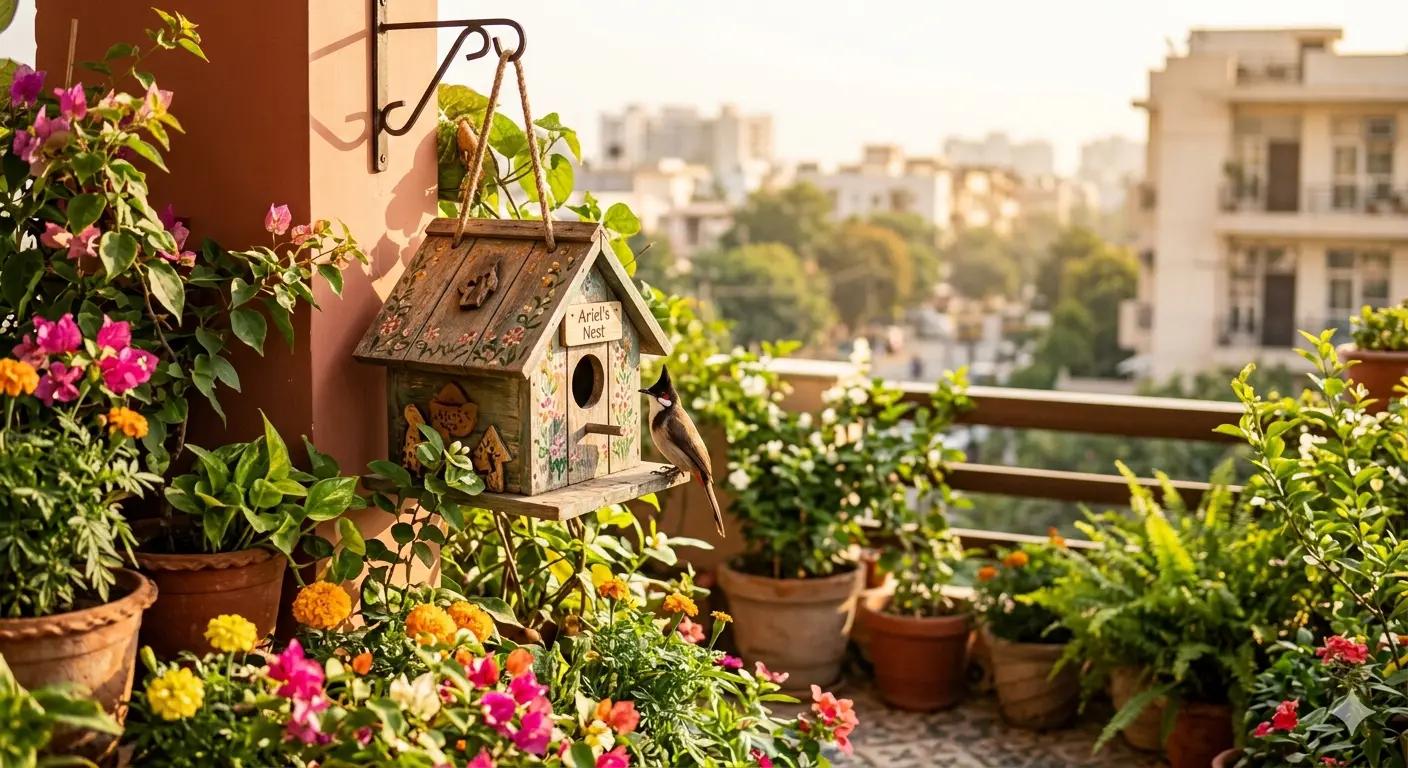
Somewhere between installing a new AC unit and adding another potted plant, many Indian balconies lost something birdsong.
If you have been thinking about putting up a birdhouse on your balcony but have no idea where to start, you are not alone. The market is flooded with options ranging from cheap plastic boxes to beautifully handcrafted wooden structures, and picking the wrong one can mean birds never come near it.
This guide cuts through the noise. Whether you live in a compact Mumbai flat, a Pune apartment, or a spacious Delhi home with a terrace, here is everything you need to find the best birdhouse for a balcony in India, one that actually works for local birds, local weather, and your specific space.
Why Your Balcony Needs a Birdhouse in 2026
Urban India is at a turning point for wildlife. House sparrows, once seen on every window ledge and rooftop, are now rarely spotted in most metro cities. Common mynas, bulbuls, sunbirds, and even parakeets are slowly retreating from residential neighbourhoods as construction replaces the natural crevices and tree hollows they once used for nesting.
A birdhouse on your balcony does more than look good. It replaces what urban development has taken away a safe, sheltered space for birds to nest, rest, and raise their young.
The demand for bird-friendly products has grown noticeably across India since 2022, and 2026 brings with it better materials, more thoughtful designs, and growing awareness among apartment dwellers about creating small green pockets in their homes.
You do not need a garden. Your balcony is enough.
What to Look for Before You Buy: The Real Checklist
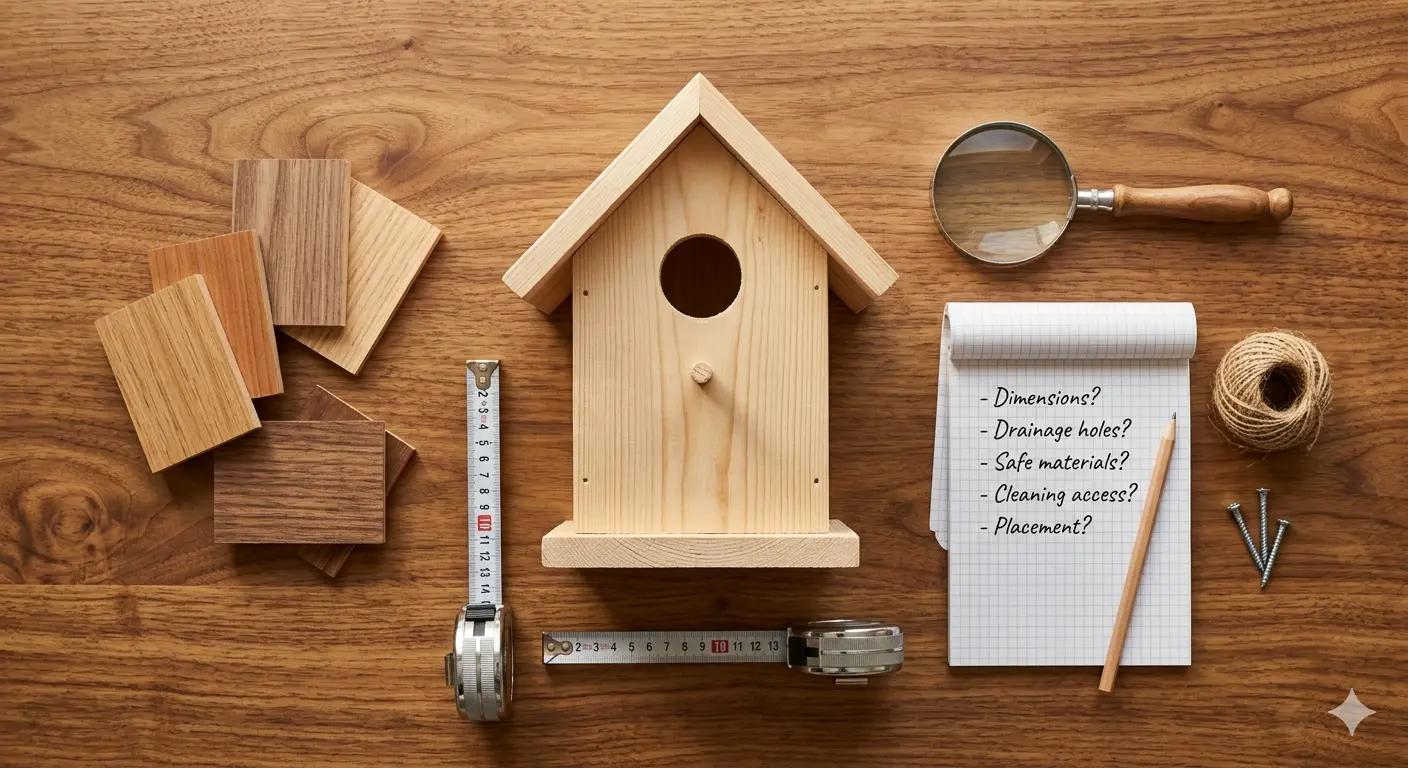
Most buying guides skip the practical stuff. Here is what actually matters when choosing a birdhouse for an Indian balcony.
1. Material — Wood Wins, Every Time
India's climate is brutal on birdhouses. You have scorching summers, heavy monsoon rains, and in some regions, biting winters. The material of your birdhouse determines how long it lasts and how safe it is for birds.
Wooden birdhouses are the best choice for Indian conditions because:
- Wood regulates internal temperature naturally — it stays cooler in summer and warmer at night compared to plastic or metal
- It breathes, which means less moisture buildup inside the nest
- Birds recognise and accept wood as a natural nesting material far more readily than synthetic alternatives
- A good-quality wooden birdhouse India-made from mango, teak, or sheesham wood can last 5 to 8 years outdoors with minimal maintenance
Avoid these materials:
- Plain plastic heats up dangerously in Indian summers, especially on south-facing balconies
- Untreated MDF swells and disintegrates within one monsoon season
- Metal conducts heat and cold directly to the nesting birds
Look for birdhouses made from naturally weatherproof wood or those with a non-toxic, water-resistant finish.
2. Entry Hole Size — This One Detail Changes Everything
The diameter of the entry hole determines which birds will use your birdhouse. Get this wrong and you will either attract no birds or attract the wrong ones.
For most Indian apartment balconies, a sparrow-sized entry hole of around 3.2 to 3.5 cm is ideal. It keeps out larger, more aggressive birds like crows and ensures the nesting pair has privacy and safety.
3. Ventilation and Drainage
This is where many cheap birdhouses fail. Without proper airflow, the inside of a birdhouse turns into an oven in April and May. Without drainage holes at the base, rainwater collects inside and destroys nesting material or worse, drowns eggs.
Before buying, check that the birdhouse has:
- At least 2 to 3 small ventilation holes near the top or sides
- 1 to 2 drainage holes at the base
- A slight forward tilt in the design so rainwater naturally runs off the roof
4. Size of the Interior
Bigger is not always better. Different birds need different interior dimensions. A house sparrow needs an internal floor space of roughly 10 to 12 cm square and an internal depth of about 15 cm. Too large and the bird feels exposed too small and it cannot nest comfortably.
5. Ease of Cleaning
A birdhouse that cannot be opened and cleaned will eventually become a health hazard. Old nesting material harbours mites, bacteria, and parasites that harm returning birds.
Look for a birdhouse with a hinged side panel, a removable roof, or a slide-open base. You should clean it out at least once a year, ideally at the end of each breeding season.
Types of Birdhouses Available in India
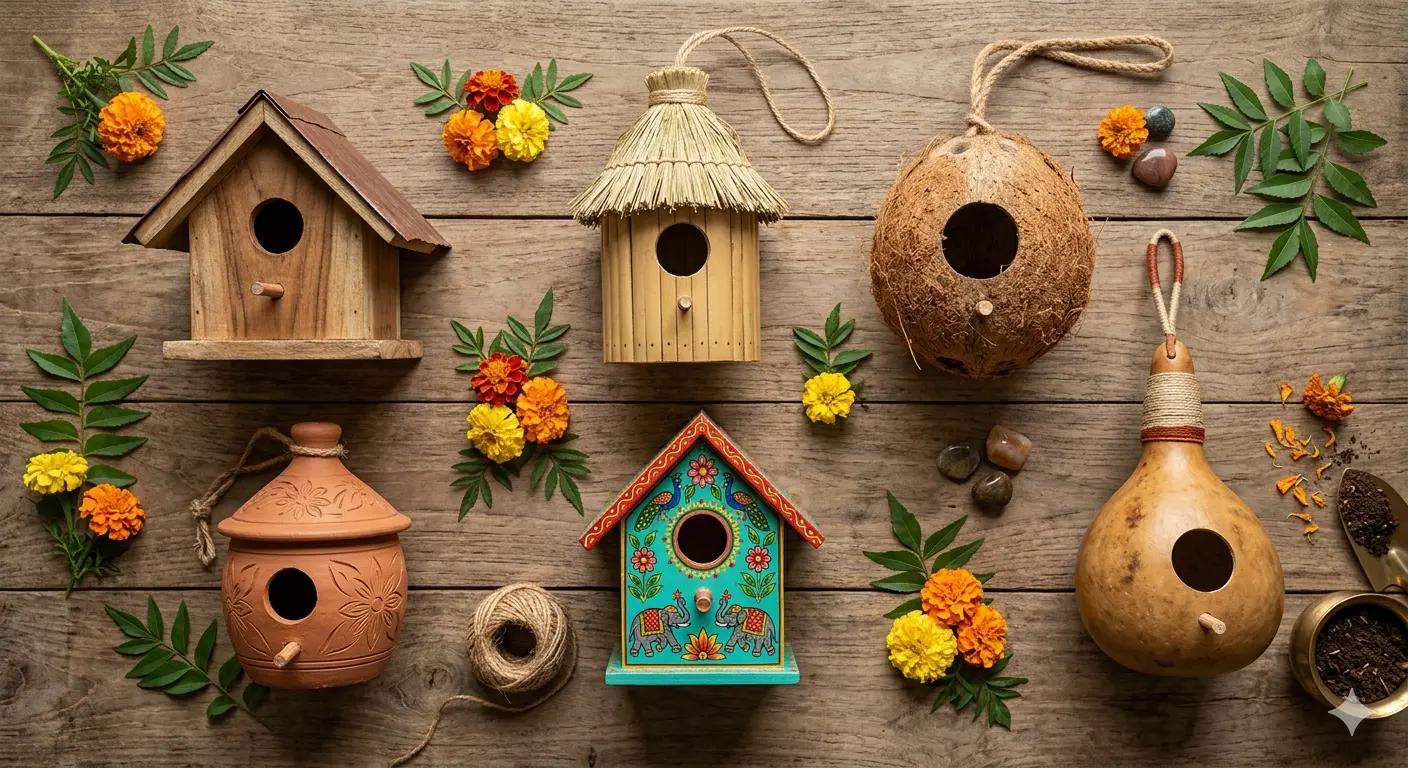
Wooden Birdhouse India: The Classic Choice
A traditional wooden birdhouse is what most Indian bird lovers reach for first, and for good reason. A solid wooden birdhouse in India combines function with warmth; it blends into a natural balcony setting and is genuinely suitable for local bird species.
What makes a good wooden birdhouse:
- Walls at least 18 to 20 mm thick, thinner wood overheats too easily
- Roof with an overhang to deflect rain from the entry hole
- No perch below the entry hole, perches look decorative but they give predators and competitor birds a foothold
- Natural or muted finish, avoid bright paints that may contain chemical compounds harmful to birds
Handcrafted wooden birdhouses made by Indian artisans particularly from Rajasthan, Karnataka, and West Bengal tend to be of significantly better quality than mass-produced alternatives. They are also better suited to Indian weather patterns since the craftspeople understand local conditions.
Hanging Bird House for Balcony: Best for Apartments
If you have a balcony with a ceiling, a railing, or a grill, a hanging bird house is likely your most practical option. It keeps the birdhouse off the floor, reduces the chance of disturbance from humans, and can be positioned in a sheltered corner away from direct weather.
Things to check when buying a hanging bird house for balcony:
- Hanging hardware should be rust-proof a basic iron hook will corrode within one monsoon season
- The rope or chain should be coated or made of stainless steel
- The birdhouse should not swing too much in wind look for a design with a weighted base or a secondary anchor point
- Confirm the total hanging length suits your balcony ceiling height most apartments have 9 to 10 feet ceilings
Hanging birdhouses also work well when you want to attract birds without drilling into walls important for renters or apartment dwellers with restrictions on modifications.
The ideal placement for a hanging bird house is under the balcony ceiling in a shaded corner, facing east or north. This gives birds a clear flight path in and keeps the nest protected from afternoon heat and monsoon rain.
Bird House for Sparrow India: Designed for the Most Beloved Urban Bird
The house sparrow is the bird most people in India are trying to bring back, and for good reason it is the species most closely associated with home, childhood memories, and the warmth of everyday Indian life.
A bird house for sparrow in India needs specific dimensions and features to actually be accepted by a nesting pair.
Sparrow-specific checklist:
- Entry hole: 3.2 to 3.5 cm diameter — this is non-negotiable
- Interior floor: 10 x 10 cm minimum
- Interior depth: 15 to 20 cm from entry hole to floor
- No interior perch or ladder — sparrows do not use them
- Smooth interior walls — do not sand or paint the inside
- Placement height: 2.5 to 4 metres above ground
- Face the entry hole east or north-east — sparrows prefer morning light and avoid harsh afternoon sun
Avoid placing a sparrow birdhouse near a bird feeder. The activity around a feeder stresses nesting birds and may cause them to abandon the box entirely.
One important note sparrow populations are protected under the Indian Wildlife Protection Act. Creating a suitable nesting environment for them is not just a kind gesture; in many ways it is a conservation act.
Decorative vs. Functional: Do You Have to Choose?
A common question: can a birdhouse be both attractive and actually used by birds?
Yes but only if the decorative elements do not compromise the functional ones. Many birdhouses sold in India as garden decor are not actually suitable for nesting. They have oversized entry holes, no ventilation, toxic paint, or are made of materials that degrade quickly.
If you want a birdhouse that doubles as balcony decor and genuinely attracts birds, look for:
- Natural wood with eco-friendly paint or stain on the exterior only
- Traditional Indian craft designs terracotta-finished wood, hand-painted folk art styles that still meet the functional criteria above
- Compact dimensions that fit your balcony aesthetic without being too large for the birds you want to attract
Handmade birdhouses from Indian artisan collectives often manage this balance best they carry real craft character while being built to a standard that birds actually accept.
Where to Place Your Birdhouse on an Indian Balcony
Getting the placement right is just as important as choosing the right birdhouse.
Height: 2.5 to 4 metres above ground. For most apartment balconies, this means ceiling height or near the top of the grill.
Direction: East or north-east facing entry hole. This gives birds soft morning warmth and protection from the hot afternoon sun and south-west monsoon winds.
Shade: Never in direct sunlight. A birdhouse in full afternoon sun especially in cities like Delhi, Nagpur, or Chennai can reach dangerous internal temperatures in May and June.
Away from traffic: Position the birdhouse in the quietest corner of your balcony, away from where you sit, walk, or water plants regularly.
Distance from feeders: Keep at least 2 to 3 metres between your birdhouse and any bird feeder. Nesting birds are territorial and the constant activity around a feeder will disturb them.
Away from reflective surfaces: Glass panels, mirrors, or metallic railings near the entry hole can disorient birds and cause fatal collisions.
Birdhouse Maintenance: What Most People Ignore
A birdhouse is not a set-and-forget item. Here is a simple annual maintenance routine that keeps it safe and functional.
Post-breeding season (July to August in most of India):
- Open the birdhouse and remove all old nesting material
- Wipe the interior with a mild salt solution do not use chemical cleaners
- Air-dry fully before closing
- Check for cracks, loose joints, or rust on hardware
Pre-breeding season (January to February):
- Inspect mounting and hanging hardware for rust or weakness
- Re-apply exterior wood finish if it has weathered
- Check that the entry hole has not been enlarged by woodpeckers or weathering
During monsoon:
- If the birdhouse is in an exposed position, temporarily move it under the balcony overhang
- Check drainage holes are clear and not blocked by debris
Final Thoughts
The best birdhouse for your balcony in India is not necessarily the most expensive one or the most beautifully painted one. It is the one that meets the functional needs of the birds you want to attract the right size, the right material, the right placement, and a little patience.
Start with a solid wooden birdhouse designed for house sparrows. Hang it in a quiet, shaded corner of your balcony facing east. Add a flat water bowl nearby. And then leave it alone.
Birds are cautious by nature. But once a pair discovers that your balcony is safe and welcoming, they will return every season and bring the kind of life and sound to your home that no houseplant or piece of furniture ever could.
If you are looking for a handmade, well-crafted birdhouse built specifically for Indian conditions and Indian birds you are already in the right place.

Written by BirdKart
Sharing expert tips on bird homes, balcony birding, and nature-friendly living. We create practical guides, care tips, and product insights to help bird lovers choose the perfect bird homes and handcrafted water clay bowls for their outdoor spaces.