Clay Water Pot vs Ceramic Bowl for Birds , Which Keeps Water Cooler in Indian Summer?

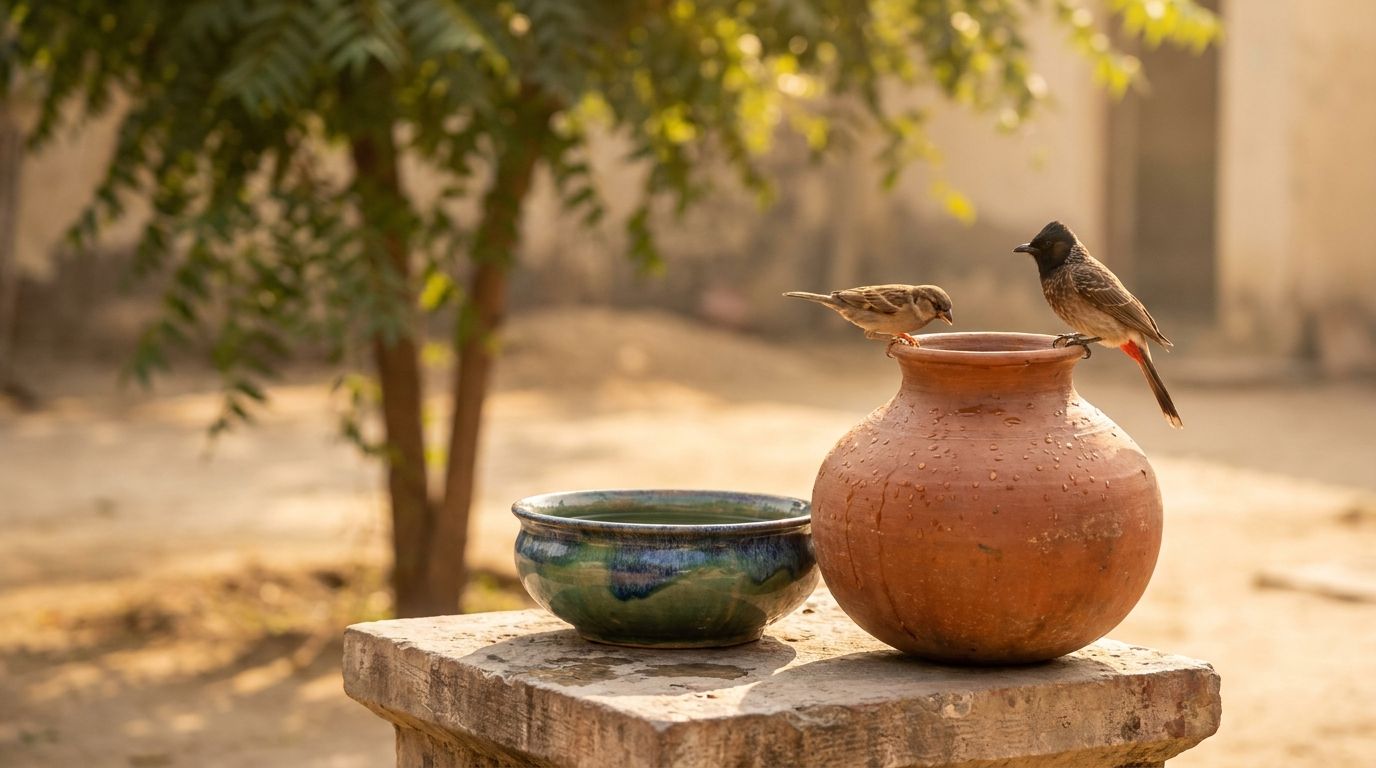
Clay Water Pot vs Ceramic Bowl , Which Keeps Bird Water Cooler in Indian Heat?
Every summer in India, millions of birds struggle to find cool, clean drinking water. Temperatures in cities like Delhi, Jaipur, Nagpur, and Hyderabad regularly cross 42°C , and the water left in a balcony bird bowl can heat up to near-bath-water temperatures within an hour or two. If you care about the birds visiting your home, the container you choose for their water matters far more than most people realise. The two most popular options in Indian homes are the humble clay water pot (matka or kulhad-style) and the glazed ceramic bowl. But which one actually keeps bird water cooler in Indian heat? Let us find out.
Why Keeping Bird Water Cool in Indian Summer Matters
Birds are highly sensitive to heat. Unlike humans, most birds cannot sweat to cool themselves , they rely on panting and bathing in water to regulate their body temperature. When outdoor temperatures cross 38°C, birds need access to water that is cool enough to drink and bathe in without raising their internal body heat further.
Stale, hot water sitting in a direct-sun bowl is not just unhelpful , it can actually be harmful. Warm, stagnant water is a breeding ground for algae, bacteria, and mosquito larvae. Birds instinctively avoid such water, which means they may leave your balcony without drinking at all. This is one of the lesser-known reasons why birds stop visiting a balcony feeder setup. You can read more about common reasons in our guide on
why birds are not visiting your setup.
Choosing the right water container is therefore a small but meaningful act of bird care , especially between March and June when Indian summers are at their peak.
How a Clay Water Pot Keeps Water Cool , The Science
The clay water pot, or matka, has been used in Indian households for thousands of years for exactly one reason: it keeps water naturally cool without any electricity. The science behind it is simple and elegant.
An unglazed clay pot is porous. Its walls are filled with tiny microscopic holes that allow a small amount of water to seep to the outer surface. When this water evaporates in the hot, dry air, it absorbs heat from the water inside the pot , a process known as evaporative cooling. The result is that the water inside a clay pot can be 5°C to 10°C cooler than the ambient temperature on a dry, hot Indian summer afternoon.
This is the same principle behind how our bodies cool down through sweating. The hotter and drier the air, the better the evaporation, and the greater the cooling effect. In the hot, low-humidity conditions of North India between April and June, a clay pot is remarkably effective.
For birds, this means fresher, cooler water that is closer to what they would find in a natural shaded stream or mud puddle , exactly the kind of water they prefer.
How a Ceramic Bowl Performs in Indian Heat
A ceramic bowl is made from fired clay, but the key difference is that most ceramic bowls sold in India and elsewhere are glazed , coated with a glass-like layer that makes them smooth, shiny, and non-porous. That glazing is precisely what makes them look attractive on your balcony, but it also eliminates all evaporative cooling.
Because the surface is sealed and non-porous, no water can seep through. There is no evaporation from the bowl walls, and therefore no cooling. A ceramic bowl sitting in direct sunlight on an Indian summer afternoon will heat up just like a metal or plastic container , absorbing the sun's heat and slowly warming the water inside.
Glazed ceramic does have advantages though. It is easy to clean, durable, resistant to cracking from moisture, and comes in beautiful designs that attract birds visually. It is not a bad option , it simply does not cool water the way clay does.
"In Indian summers, the matka is not just a water pot , it is a cooling system. Nature engineered it long before refrigerators existed." , Traditional Indian craft wisdom
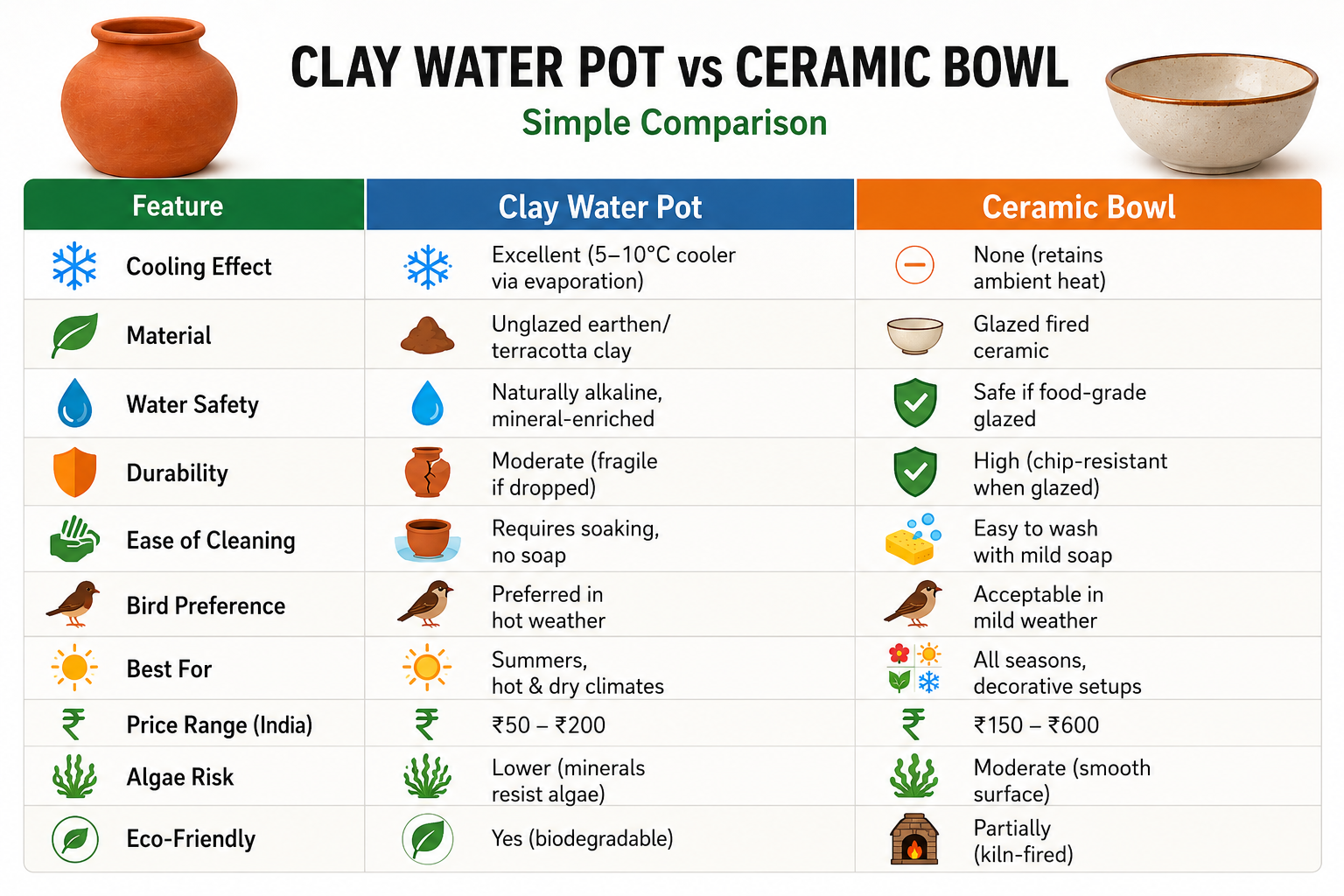
Clay Water Pot vs Ceramic Bowl , Complete Comparison
Here is a side-by-side comparison to help you decide which is better for keeping bird water cool:
Clay Water Pot for Birds: Advantages and Limitations
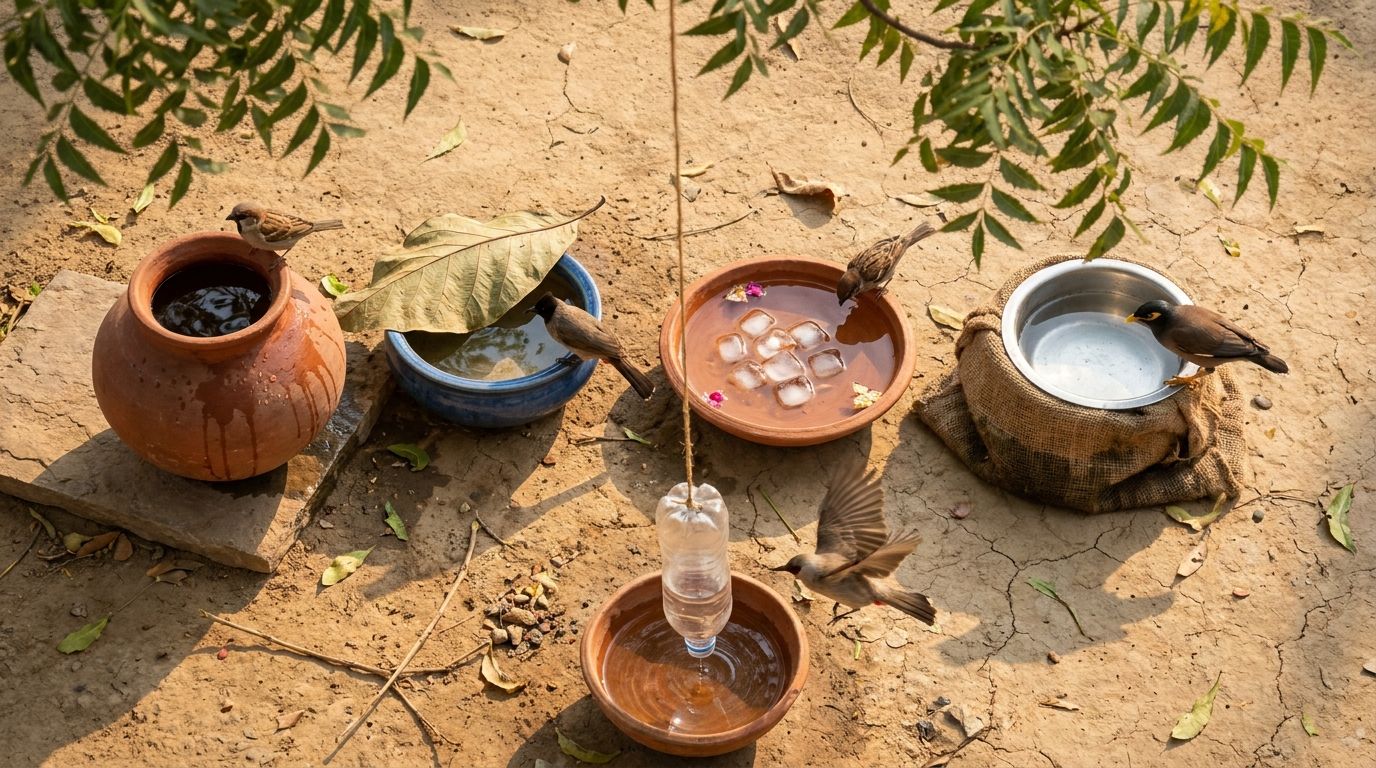
Why Bird Lovers Prefer Clay Water Pots in Summer
- Keeps water 5–10°C cooler through natural evaporation , no electricity needed
- The earthy mineral content of clay is believed to benefit birds' digestive health
- Porous surface naturally discourages algae and slime buildup compared to smooth bowls
- Affordable and widely available across India , local potters, kirana stores, and online
- Eco-friendly, biodegradable, and supports traditional Indian craftsmanship
- Birds seem more comfortable drinking from earthy, natural-looking containers
Limitations to Keep in Mind
- Unglazed clay is fragile and can crack if dropped or exposed to sudden temperature changes
- Needs to be cleaned without soap (soap can get absorbed into the pores); use hot water and sunlight
- Evaporative cooling works best in hot, dry air , effectiveness reduces in humid coastal climates
- Water can develop a slight earthy taste which some birds may take time to get used to
Ceramic Bowl for Birds: Advantages and Limitations
Where Ceramic Bowls Shine
- Easy to clean thoroughly with mild soap and water , important for bird health
- Smooth glazed surface makes it harder for bacteria to embed between cleaning sessions
- More durable and chip-resistant than unglazed clay when handled carefully
- Available in attractive designs, colours, and sizes that suit different balcony aesthetics
- Works well in all seasons, not just summer , no special care needed in monsoon or winter
Where Ceramic Falls Short in Indian Summer
- Does not cool water , water temperature matches or exceeds ambient heat quickly
- Dark-coloured ceramic bowls placed in direct sunlight can heat water dangerously fast
- More expensive than clay pots for equivalent sizes
- Heavier and less convenient to change positions frequently
Which One Should You Choose?
If you are asking purely about keeping bird water cooler in Indian summer heat, the answer is clear: a clay water pot wins every time. The evaporative cooling effect is real, measurable, and meaningful for birds visiting your balcony during April, May, and June.
However, both containers have their place. The ideal setup for serious bird lovers in India is to use a clay pot or shallow kulhad-style earthen water dish as your primary bird water source during summer months (March to June), and switch to or supplement with a ceramic bowl in monsoon and winter when evaporative cooling is less critical.
If your balcony gets partial shade for most of the day, even a ceramic bowl can work reasonably well when placed in the shaded area. But for a balcony that receives direct sun in the afternoon , which is most Indian balconies facing south or west , the clay pot is the smarter, kinder choice for the birds.
Pairing a good water source with the right feeder makes a huge difference. Our detailed blog on the
clay feeder vs plastic feeder vs wooden feeder comparison covers similar material science insights for bird feeding containers , worth reading together with this guide.
"The simplest things you can do for birds this summer are shade, water, and patience. A clay pot under a shade net costs less than ₹200 and could save a sparrow's life on a 45°C afternoon." , BirdKart Bird Care Guide
5 Practical Tips to Keep Bird Water Cool in Indian Summer
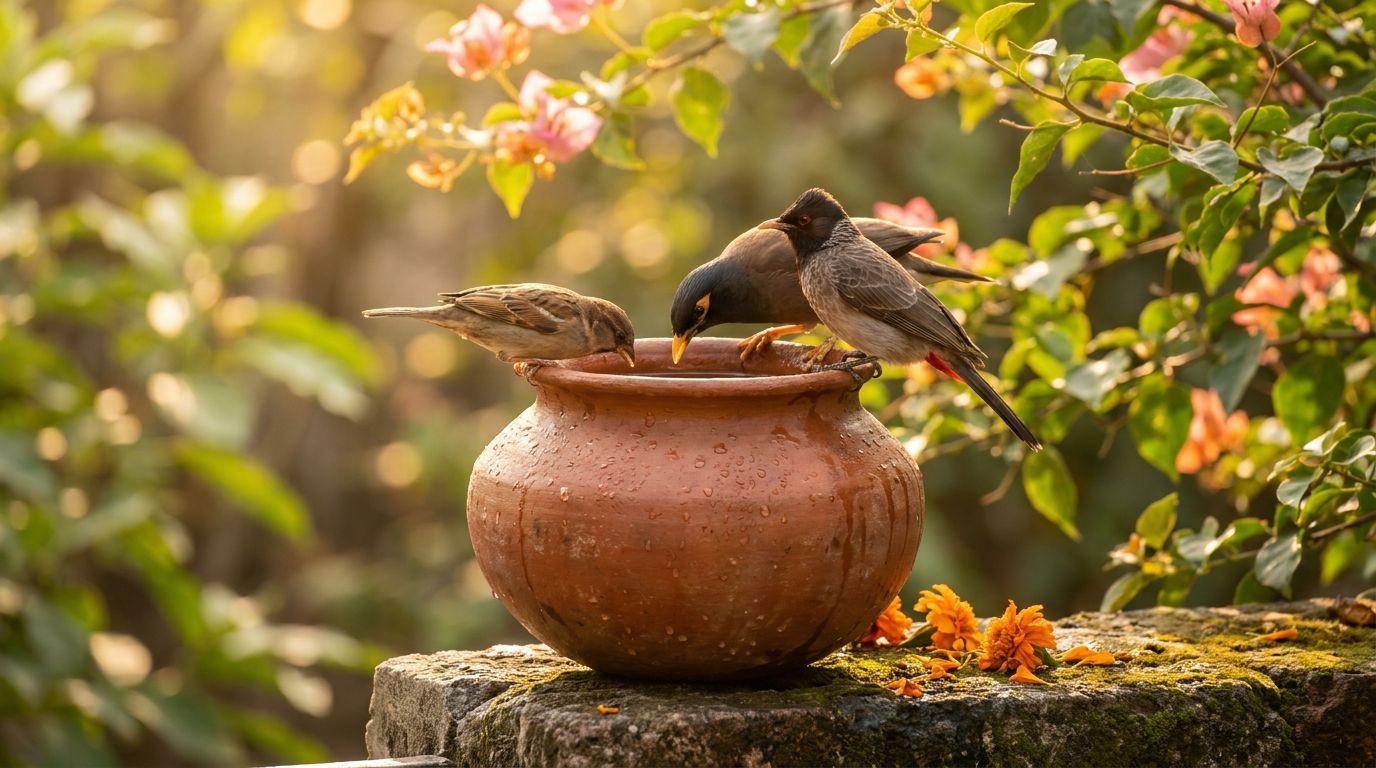
- Place the water container in a shaded spot , east-facing balconies get morning sun which is gentler; shade from noon onward is ideal
- Change the water at least twice a day in peak summer , morning and evening , to keep it fresh and cool
- Use a wider, shallow clay dish rather than a deep pot; shallower water heats faster but is easier for small birds like sparrows to drink from safely
- Wrap a damp cloth around a ceramic bowl if you do not have a clay pot , it mimics the evaporative cooling effect partially
- Keep a few clean pebbles or marbles inside the water dish so small birds can perch safely without drowning
If you are setting up a complete summer bird station on your balcony, our guide on
how to attract sparrows to your balcony in India has everything you need , from the right food to placement tips that work even in high-rise apartments.
Final Verdict
In the battle of clay water pot vs ceramic bowl for keeping bird water cool in Indian heat, the clay water pot is the clear winner for summer months. Its natural evaporative cooling mechanism, low cost, eco-friendliness, and appeal to birds make it the most sensible choice for any Indian bird lover who wants to genuinely help birds survive the summer heat.
That said, a ceramic bowl is not a bad product , it excels in ease of cleaning, durability, and year-round use. The best approach is to own both: use clay in summer, ceramic in other seasons, and always keep the water fresh.
Small acts of care , a clean clay pot of cool water on a shaded balcony , can make a real difference to the sparrows, bulbuls, mynas, and pigeons that share our cities. This summer, let your balcony be their oasis.
🏡 Ready to set up a complete bird-friendly balcony? Explore BirdKart's handmade birdhouses, feeders & accessories →

Written by BirdKart
Sharing expert tips on bird homes, balcony birding, and nature-friendly living. We create practical guides, care tips, and product insights to help bird lovers choose the perfect bird homes and handcrafted water clay bowls for their outdoor spaces.