Clay Pot vs Plastic Bowl vs Steel Bowl Which Is Best for Bird Water in India

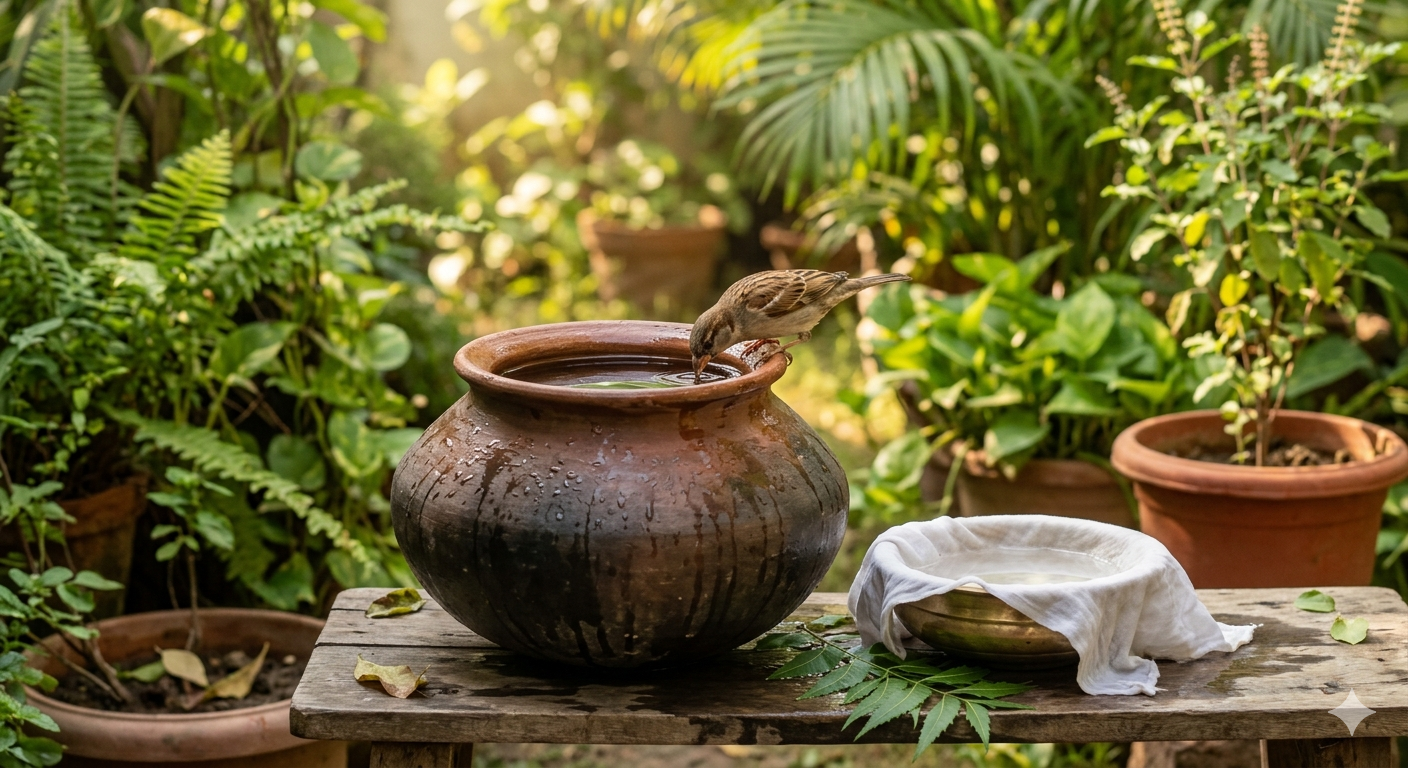
Every summer in India, millions of birds silently suffer from something most of us never think about the bowl we choose to put water in for them.
You fill it up in the morning, leave it on your balcony, and feel good about it. But by noon, the water inside a plastic bowl is warm enough to make tea. A steel bowl sitting in the sun becomes a radiator. And that clay pot your grandmother swore by? Still cool. Still fresh. Still working the way it always has.
If you have been wondering which bowl is best for bird water in India, this guide breaks it down completely no guesswork, no fluff. Just a straight comparison of clay, plastic, and steel so you can make the right choice for the birds visiting your balcony or garden.
Why the Water Container Matters More Than You Think
Most people focus on where to place bird water shade vs sun, height, proximity to the birdhouse. Very few think about what they are placing it in.
This is a mistake.
The material of your bird water bowl directly affects:
- Water temperature hot water can cause dehydration and heat stress in birds, not relief
- Bacterial growth warm, stagnant water in certain materials breeds bacteria faster
- Bird safety some materials leach chemicals that are harmless to humans but dangerous to small birds
- How often you need to refill evaporation rate varies dramatically by material
In India's climate, where peak summer temperatures in cities like Delhi, Nagpur, and Chennai regularly cross 42°C, the wrong bowl can turn your good intention into something harmful.
"Providing water for birds during Indian summers is one of the most impactful things an urban resident can do. But the container matters just as much as the water itself. Clay pots remain cooler than any synthetic material and are the most bird-safe option available." Wildlife care educators and bird rescue volunteers across India consistently recommend earthen containers during summer months.
Clay Pot for Birds Water India The Old Answer That Still Wins
There is a reason clay pots have been used across India for centuries. They are not traditional out of habit they are traditional because they genuinely work.
How a Clay Pot Keeps Water Cool
Clay is a porous material. When water is stored in an earthen pot, a small amount seeps through the microscopic pores and evaporates from the surface. This evaporation process draws heat out of the water inside the same science that makes a matka cooler than your refrigerator in dry climates.
For birds, this means the water inside a clay pot stays 5°C to 8°C cooler than the surrounding air temperature, even when placed in partial shade on a hot afternoon.
Why Birds Prefer Clay
It is not just about temperature. Birds are instinctively drawn to natural materials. The texture of an earthen pot gives small birds like sparrows, bulbuls, and sunbirds a surface to grip, which a smooth plastic or steel bowl simply does not provide. The slightly rough interior of a clay bowl means birds can stand at the edge without slipping.
Clay also does not reflect sunlight the way steel does, so birds do not get startled by sudden flashes of light near their water source.
Clay Pot Bird Water Practical Points
- Best size: 15 to 20 cm diameter, 4 to 6 cm depth deep enough to hold water, shallow enough to be safe for small birds
- Placement: Shaded corner of balcony, away from direct afternoon sun
- Cleaning: Rinse daily with clean water, scrub gently with a soft brush once a week no soap or detergent
- Monsoon care: Bring clay bowls indoors during heavy rain to prevent waterlogging and cracking
Verdict for clay pot: ✅ Best choice for keeping water cool in Indian summers. Safe, natural, bird-friendly, and effective.
Plastic Bowl for Bird Water Convenient, But Costly in Summer
Plastic bird water bowls are the most widely available option in India. They are cheap, lightweight, and come in bright colours that look attractive on a balcony. If you search for a bird water feeder for balcony India, plastic options dominate the first page of every marketplace.
But here is what those listings do not tell you.
The Heat Problem
Plastic is an excellent insulator but that works against you in summer. A plastic bowl sitting in direct sunlight absorbs and traps heat. Water inside a dark-coloured plastic bowl placed in the sun can reach temperatures above 45°C within two hours of being filled on a hot May afternoon.
Birds that drink overheated water do not get relief they get further stressed.
The Chemical Problem
Low-quality plastic, especially the kind used in cheap bird feeders, contains compounds that begin leaching into water when exposed to prolonged heat and UV radiation. BPA and phthalates are the most commonly discussed. While research on birds specifically is limited, the fact that these chemicals are harmful to small mammals and insects strongly suggests caution.
If you do use a plastic bowl, choose food-grade BPA-free plastic and replace it annually do not use discoloured, scratched, or sun-damaged plastic near bird water.
"Plastic may seem like the easiest option, but in India's summer conditions, it becomes a liability. The same heat that cracks a dashboard can turn a plastic bowl into a chemical soup. For birds weighing less than 30 grams, even trace contamination is significant."
Plastic Bowl When It Works
Plastic is acceptable during cooler months October through February when temperatures are manageable. It is also fine for indoor caged birds where the environment is controlled and the bowl is cleaned daily.
During peak Indian summer, avoid plastic for outdoor bird water.
Verdict for plastic: ⚠️ Acceptable in winter, problematic in summer. Not recommended as your primary bird water container from March to June.
Steel Bowl for Bird Water Durable, But Dangerous in the Sun
Stainless steel bird water bowls look premium. They are rust-proof, easy to clean, and built to last years. Many bird enthusiasts in India keep a steel bowl on their balcony and genuinely believe they are doing right by their birds.
The problem is physics.
Steel and Heat A Bad Combination
Metal is one of the most efficient conductors of heat that exists. A stainless steel bowl placed in direct sunlight heats up within minutes not hours. The water inside reaches dangerous temperatures faster than in any other material.
More critically, the bowl itself becomes hot to the touch. Birds that land on the rim of a steel bowl baking in the summer sun can burn their feet a real risk for sparrows and finches that perch on the edge to drink.
The Reflection Problem
Polished steel reflects light intensely. Birds that approach a shiny steel bowl on a bright day often see their own reflection and interpret it as a competitor or predator. This causes them to avoid the water source entirely, defeating the whole purpose.
"A steel bowl in summer does two things wrong at once it heats the water and frightens the birds. If you want birds to actually use the water you put out, material choice is not a minor detail. It is the whole point."
When Steel Works Well
Steel is genuinely good for indoor cage birds where the bowl is attached to the cage and sheltered from direct sun. It is easy to sanitise thoroughly, which matters for birds that spend all day near their water source.
For outdoor balcony use in Indian summers, steel is the least suitable option among the three.
Verdict for steel: ❌ Not recommended for outdoor bird water in Indian summers. Acceptable for indoor caged birds in controlled environments.
Earthen Pot vs Plastic Bowl for Bird Water Direct Comparison
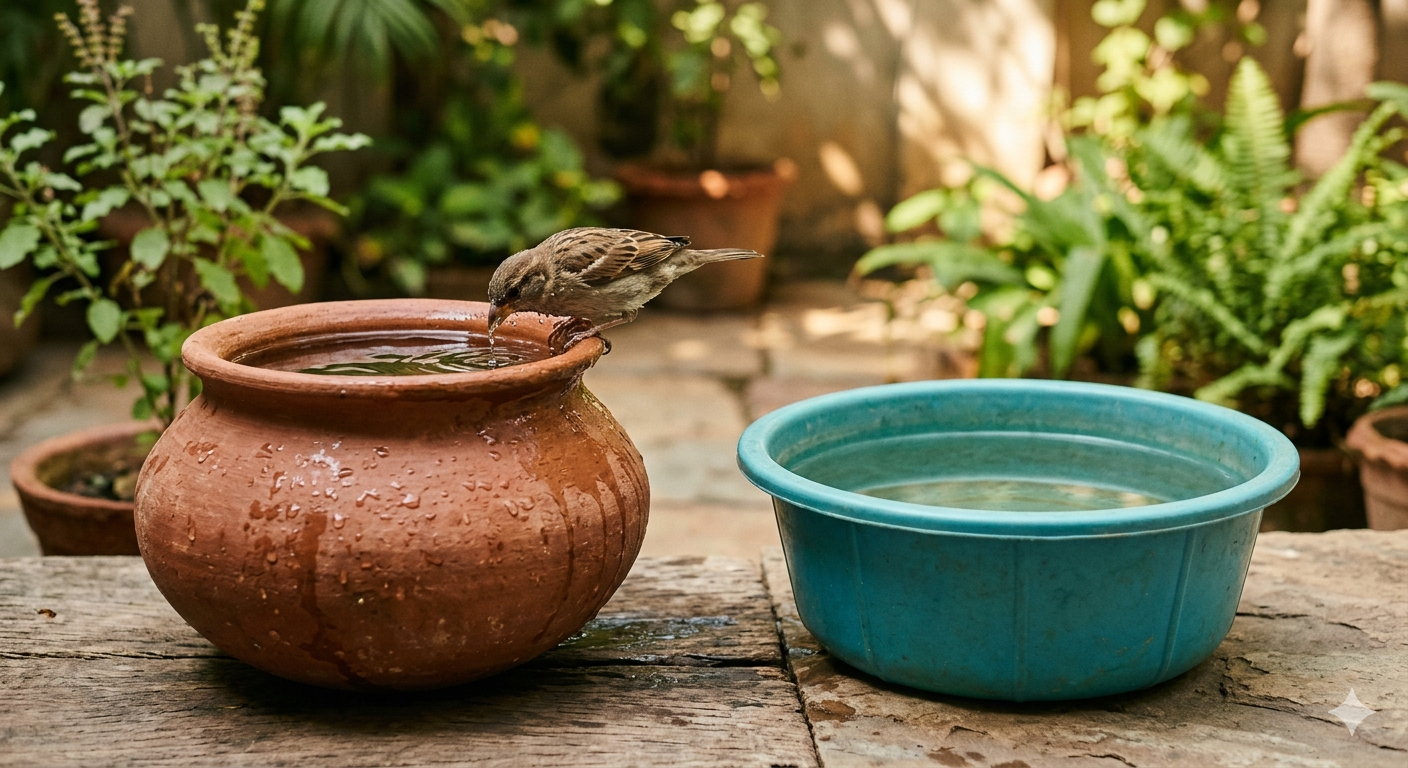
If you are still weighing up earthen pot vs plastic bowl for bird water, here is the side-by-side breakdown:
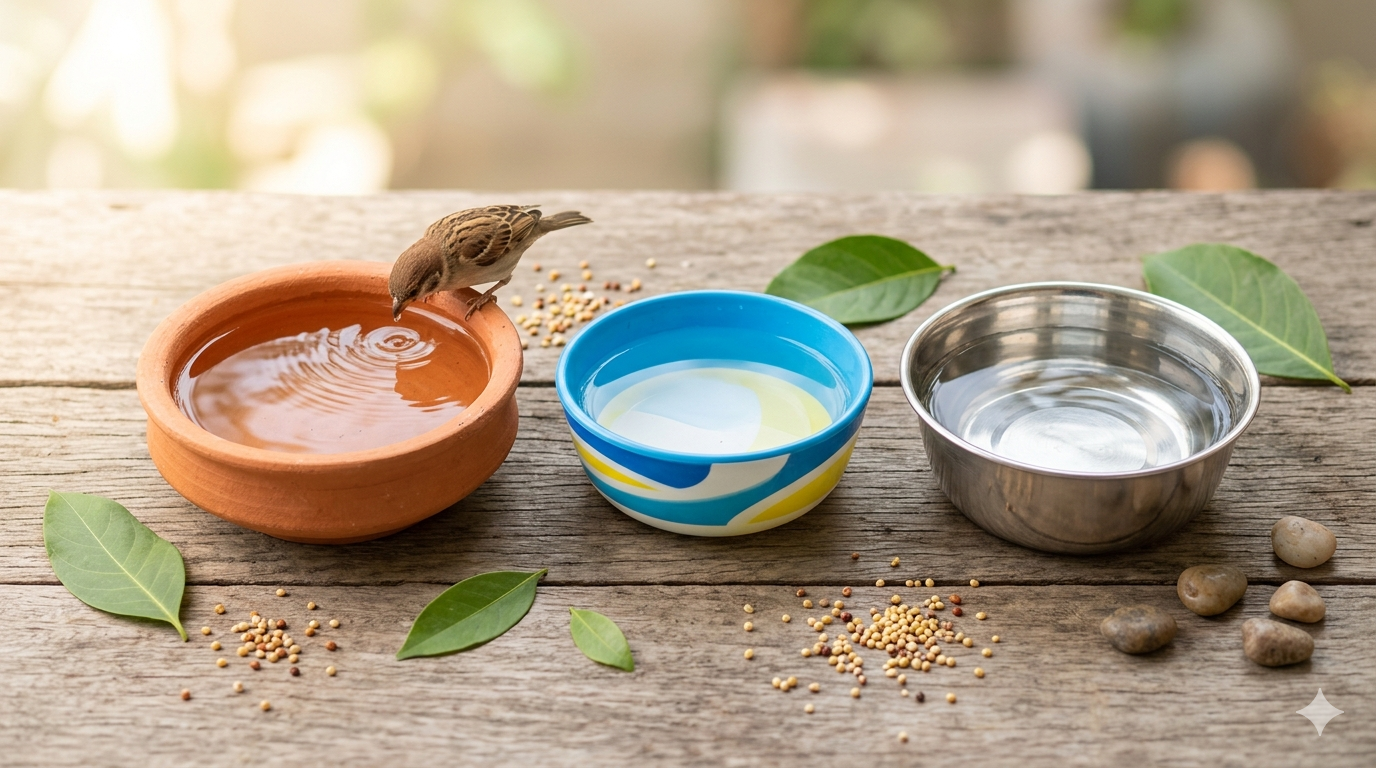
- Water Temperature Clay pots keep water 5–8°C cooler than air temperature due to natural evaporation. Plastic heats up quickly in sunlight, and steel heats up the fastest — making water uncomfortably warm for birds within hours.
- Chemical Safety Clay is 100% natural with zero leaching. Plastic carries a risk of BPA leaching in heat. Steel is safe from any chemical leaching.
- Bird Grip Clay's rough texture gives birds an excellent perching grip. Both plastic and steel have slippery surfaces, and steel rims can get dangerously hot in summer, risking burns on a bird's feet.
- Bacterial Growth Cooler water in clay pots slows down bacterial growth. Plastic and steel bowls warm up faster, encouraging bacteria and algae to grow more quickly.
- Cleaning Plastic and steel are easiest — both are dishwasher safe. Clay needs a weekly scrub and proper drying to prevent fungal buildup inside the pores.
- Durability Steel is the most durable, followed by plastic. Clay can crack if dropped and needs careful placement.
- Eco-Friendliness Clay is fully biodegradable and the most eco-friendly. Plastic is the worst for the environment. Steel is recyclable but not biodegradable.
- Price in India Clay: ₹70–₹400 | Plastic: ₹80–₹600 | Steel: ₹150–₹800
- Best for Indian Summer Clay pot is the top choice. Avoid plastic in peak summer. Avoid steel outdoors entirely.
How to Keep Water Cool for Birds in Summer 5 Practical Tips
Even with the right bowl, placement and routine matter. Here is how to keep water cool for birds in summer regardless of which container you choose:
1. Place in deep shade, not partial shade. The north-facing corner of a balcony gets the least direct sun across the day. This single change can reduce water temperature by 4–6°C compared to an east or south-facing spot.
2. Refill twice a day minimum. Once in the morning before 8 AM and once in the early evening after 5 PM. Fresh cool water attracts birds immediately and prevents bacterial buildup.
3. Add small stones inside the bowl. Place 2 to 3 clean pebbles at the bottom. This gives smaller birds like sparrows a perch point inside the bowl so they can drink without risking drowning, and it adds a small amount of thermal mass to slow heating.
4. Never use chilled water directly from a refrigerator. Extreme cold water can shock birds that are already heat-stressed. Room temperature water or water that has been stored in a clay pot is ideal.
5. Keep the bowl away from bird feeders. Activity and seed husks near the water source contaminate it quickly and stress nesting birds. Maintain at least 2 metres between your feeder and your water bowl.
The Best Bird Water Bowl for Balcony India Our Recommendation
If you have a balcony in an Indian city and want to genuinely help birds through summer, the answer is simple: use a clay or terracotta bowl.
A hanging earthen bird water pot between 15 and 20 cm in diameter, placed in a shaded corner, refilled twice a day, is the closest thing to a natural water source that a sparrow, bulbul, or myna will find in an urban environment.
It costs less than ₹150 in most cases. It does not require electricity. It does not need replacing every season. And it works with Indian climate conditions rather than against them.
For the best bird water bowl for balcony India, look for:
- Natural clay or terracotta material (not painted interior)
- Shallow depth 4 to 6 cm maximum
- Diameter of 15 to 20 cm
- Hanging design with rust-proof rope or chain
- No chemical sealants on the inside surface
Frequently Asked Questions
Q1. Which bowl is best for bird water in India?
A clay or terracotta bowl is the best choice for bird water in India, especially during summer. It keeps water cool through natural evaporation, is completely non-toxic, and has a texture that birds can grip safely.
Q2. Can I use a steel bowl for bird water on my balcony? Steel bowls are not recommended for outdoor use in Indian summers. Steel heats up rapidly in direct or indirect sunlight, and the hot rim can harm small birds. Use steel only for indoor caged birds where the environment is controlled.
Q3. How often should I change bird water in summer? Refill and refresh the water at least twice a day during summer once in the morning and once in the evening. Do not let water sit for more than 12 hours in high temperatures as bacteria multiply quickly in warm water.
Q4. How do I clean a clay bird water bowl? Rinse the clay bowl with fresh water every day. Once a week, scrub the interior gently with a soft brush to remove algae or residue. Never use soap, detergent, or chemical cleaners inside a clay bowl as the porous surface will absorb them and release them back into the water.
Q5. Where should I place the bird water bowl on my balcony? Place it in the shadiest corner of your balcony, away from direct sun, away from your bird feeder (at least 2 metres), and at a height that feels safe from cats or disturbance ideally hung from the ceiling or placed on an elevated surface.
Final Thoughts
The birds in your neighbourhood do not ask for much. A safe place to nest, a little food, and clean cool water. That last one the water is something you can provide in minutes with the right container.
Clay pot for birds water India is not a new idea. It is a proven one. Millions of Indian households already do this every summer. The only question is whether yours will be one of them.
Pick a terracotta bowl. Hang it in the shade. Fill it every morning. The sparrows will find it usually within a few days.
And when they do, you will understand why a simple clay pot is worth more than any expensive gadget you could buy.
Looking for handmade, eco-friendly birdhouses and bird accessories designed specifically for Indian balconies? Explore BirdKart's full collection built with the same care and natural materials that birds deserve.

Written by BirdKart
Sharing expert tips on bird homes, balcony birding, and nature-friendly living. We create practical guides, care tips, and product insights to help bird lovers choose the perfect bird homes and handcrafted water clay bowls for their outdoor spaces.