How to Choose the Right Birdhouse Size for Sparrows

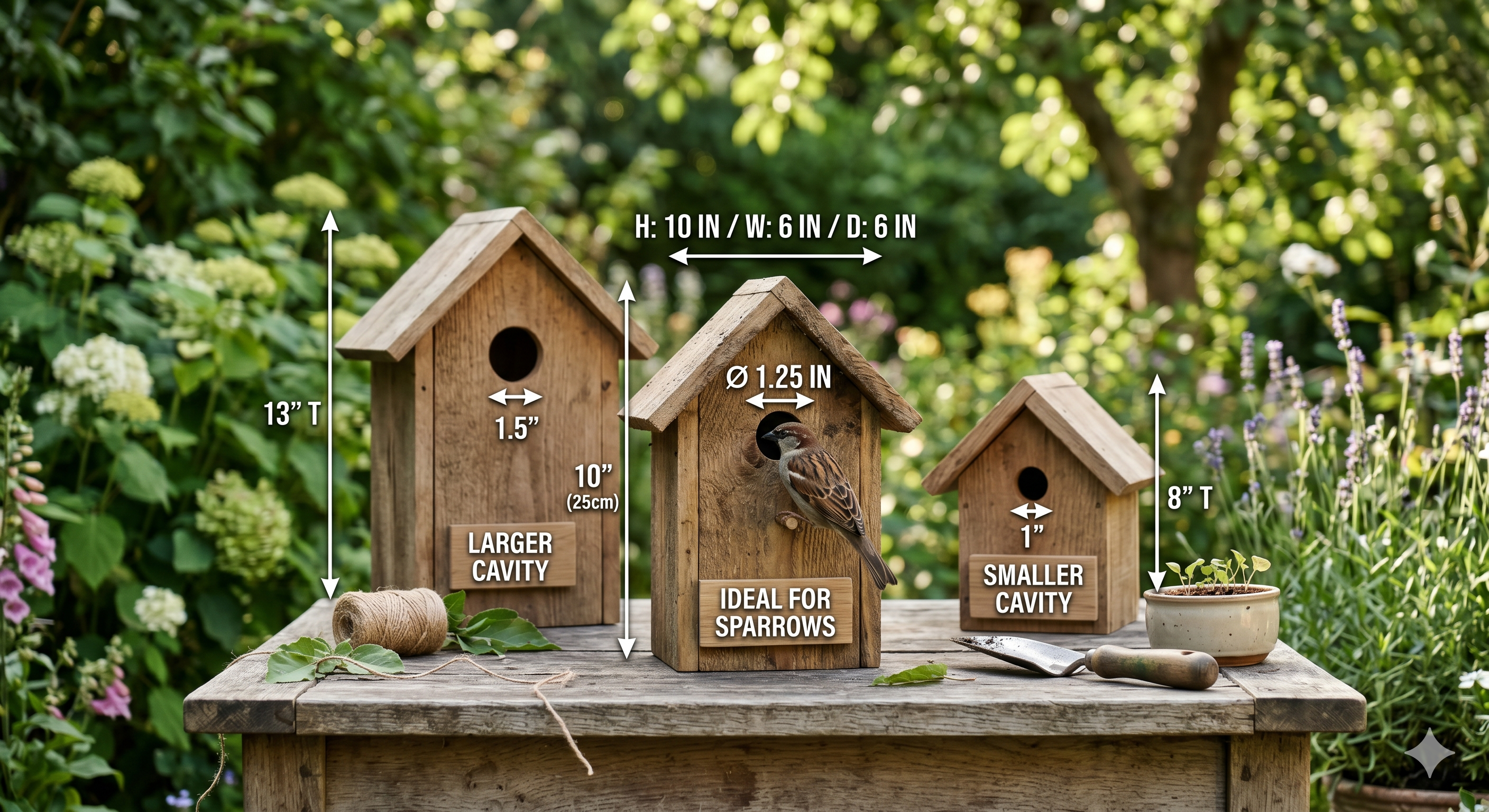
Every year, thousands of well-meaning bird lovers in India hang a birdhouse on their balcony and wait. And wait. The sparrows come close, sit on the ledge, look around, and fly away. The birdhouse stays empty.
In most cases, the problem is not placement or paint or even location. It is size. Sparrows are precise creatures. They have very specific requirements for the space they will nest in. If a birdhouse does not meet those requirements, they simply will not use it, no matter how beautiful it looks.
This guide covers everything you need to know about birdhouse size for sparrows: the exact dimensions that work, what each measurement means, and how to make sure your nest box is genuinely sparrow-ready before the nesting season begins.
Why Size Matters More Than Anything Else
Sparrows are not casual visitors. When they choose a nesting site, they are committing to raising eggs and chicks in that space for several weeks. To understand why sparrows are so selective, it helps to read more about how sparrows choose and build their nests. A birdhouse that feels wrong in any dimension (too large, too small, entry hole too wide or too narrow) will be rejected before a sparrow even steps inside.
The three dimensions that matter most are the entry hole diameter, the internal floor space, and the internal depth. Get these right, and sparrows will move in quickly. Get them wrong, and larger birds will take over or the box will sit unused all season.
Sparrow Nest Box Size: The Complete Dimensions Guide
The table below gives you the minimum, ideal, and maximum values for each measurement in a sparrow nesting box India-suitable design. These measurements are specific to the house sparrow (Passer domesticus), which is the most common sparrow species found on Indian balconies and in urban gardens
Use the ideal column as your target. The minimum values will work but leave little room for comfort. The maximum values are the outer limits. Beyond these values, sparrows tend to feel exposed and will avoid the box.
Sparrow House Entry Hole Size: Getting This Right is Critical
The entry hole is the single most important dimension on any sparrow birdhouse. It controls which birds can enter and which cannot.
What size hole for sparrow birdhouse in India?
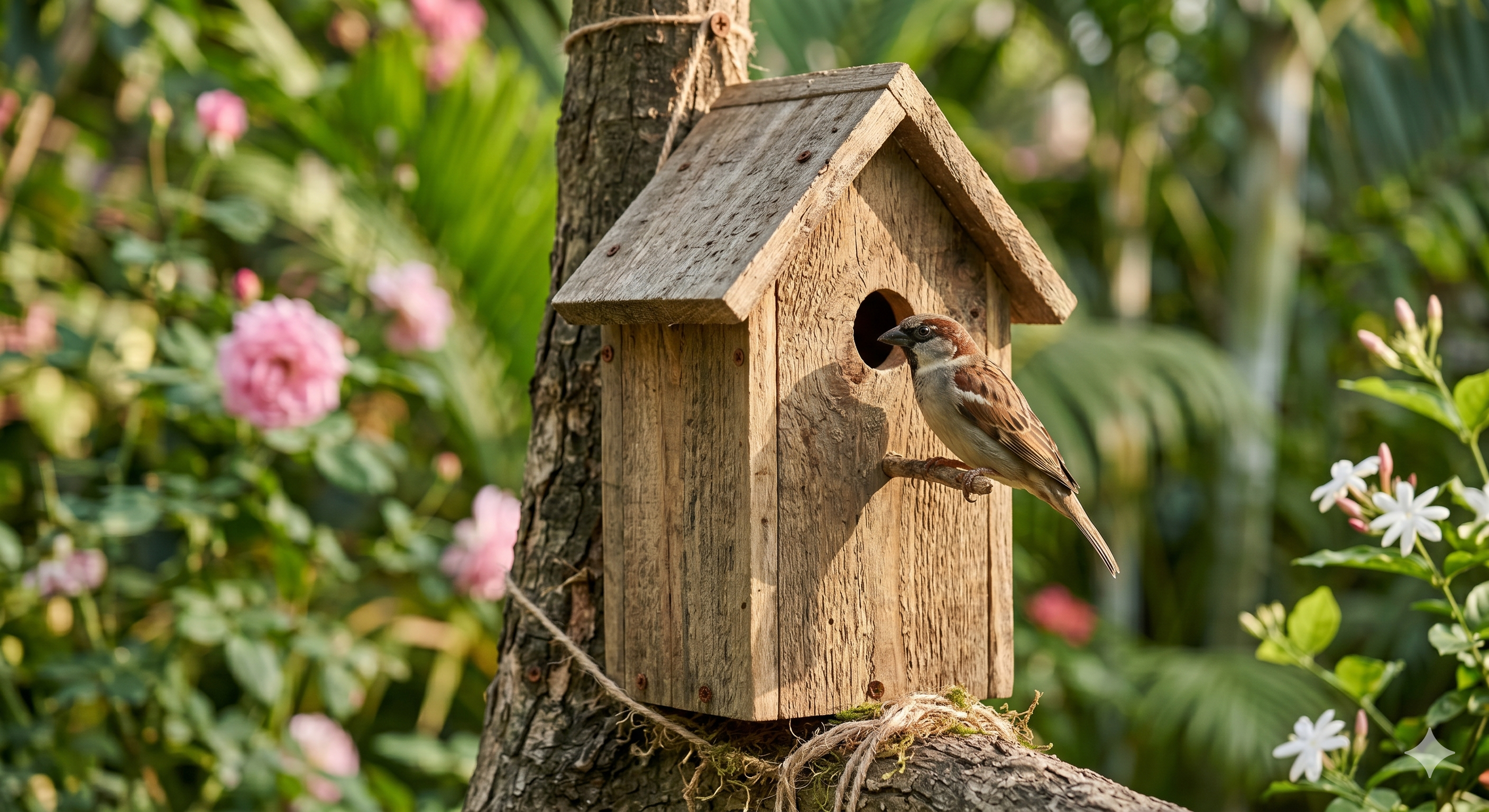
For house sparrows, the ideal sparrow house entry hole diameter is 3.2 to 3.5 centimetres. This is large enough for a sparrow to enter and exit comfortably, but small enough to keep out bulbuls, mynas, and other larger birds that would otherwise compete for or take over the nest.
A hole smaller than 3.0 cm will even prevent sparrows from entering. A hole larger than 3.8 cm opens the door to mynas and other birds that will aggressively displace sparrows or destroy their eggs. Learn more about how to protect your birdhouse from predators and competitor birds.
Shape of the Entry Hole
Round holes work best. Oval holes are acceptable but offer no advantage. Square or irregular openings are not recommended. They do not occur naturally and sparrows tend to be cautious around unfamiliar shapes.
Position of the Entry Hole
Place the entry hole 12 cm above the floor of the box. This gap between the hole and the floor is important. It makes it harder for predators to reach inside and grab eggs or chicks. A hole placed too low effectively gives any intruder direct access to the nest.
Floor Space and Internal Depth
Floor Space
For a nest box for house sparrow, the internal floor area should be 12 x 12 cm. This gives the sparrow pair enough space to build a comfortable nest and raise chicks without the box feeling crowded.
A common mistake is making the floor too large. A sparrow in a floor area bigger than 15 x 15 cm will feel exposed, and the pair may abandon the box or fail to raise chicks successfully because they cannot adequately cover the eggs.
Internal Depth
The internal depth measured from the floor to the underside of the roof should be 15 cm. This depth keeps chicks safe inside the box as they develop. Boxes shallower than 13 cm allow chicks to fall out or be pulled out by predators. Boxes deeper than 18 cm make it difficult for chicks to fledge (exit the box) when they are ready.
Wall Thickness and Weatherproofing
Wall thickness is not just a structural concern. It directly affects temperature inside the nest box. Thin walls (under 15 mm) allow the interior to overheat rapidly during Indian summers, which can be fatal for eggs and chicks.
For a wooden sparrow house India-suitable design, walls should be at least 18 to 20 mm thick. This thickness provides natural insulation, keeps the interior cooler on hot days, and gives the structure enough rigidity to survive monsoon winds and rain without warping. Choosing the right wood species makes a significant difference.
Wood species matter here too. Mango wood, teak, and sheesham are naturally weather-resistant and handle Indian climate conditions well. MDF and thin plywood absorb moisture and can disintegrate within a single monsoon season.
Roof Design and Overhang
A roof overhang of at least 5 cm keeps rain from entering through the entry hole. During heavy monsoon rains, a birdhouse without adequate overhang will collect water inside, destroying the nest and potentially drowning eggs.
The roof should slope away from the entry hole. A flat roof holds rainwater and creates damp conditions inside. A sloped roof sheds water efficiently and keeps the interior dry through the nesting season.
Ventilation and Drainage
Two often-overlooked details that make a significant difference:
- Ventilation holes: Two to three small holes (6 to 8 mm diameter) near the top of the side walls allow hot air to escape and prevent the interior from turning into an oven in April and May.
- Drainage holes: Two to four small holes in the floor allow any water that enters to drain out. Without these, rainwater or condensation accumulates and creates a damp, unhealthy environment.
Both features are absent on many cheap birdhouses sold online. They look small, but they make the difference between a birdhouse that sparrows use and one that remains empty.
One Feature You Do Not Need: The Perch
Most decorative birdhouses come with a small perch rod below the entry hole. It looks charming. Sparrows do not need it and it actually makes the birdhouse less safe.
A perch below the entry hole gives crows, cats, and competitor birds a foothold to reach inside or block the entrance. House sparrows are comfortable clinging to the entry hole directly and do not require a perch to enter.
If your sparrow nesting box India purchase comes with a perch, remove it before hanging the box.
When to Put Up Your Sparrow Nest Box in India
House sparrows in northern India typically begin nesting from February through June, with peak activity in March and April. In southern India, nesting can begin slightly earlier, in January. For a full overview of sparrow nesting behaviour across seasons, see our post on understanding sparrow nesting habits.
Put your birdhouse up at least two to three weeks before the nesting season begins. Sparrows scout locations in advance and are more likely to choose a box that has been in place for a few weeks than one that appeared the day before.
Clean the box after each nesting season. Clean it in July or August after the monsoon to prepare it for the next year. Our step-by-step nest box cleaning and maintenance guide walks you through the full process safely.
Common Questions
What is the best birdhouse size for sparrows in India?
A floor space of 12 x 12 cm, internal depth of 15 cm, and an entry hole of 3.2 to 3.5 cm is the most reliable combination for attracting house sparrows in Indian urban settings.
What is the sparrow house entry hole diameter in India?
3.2 to 3.5 cm. This size is specifically suited to the house sparrow and excludes most larger birds that would otherwise compete for the nest.
Can I use a birdhouse meant for other birds?
Not without modifications. Birdhouses designed for parrots or larger birds have entry holes of 5 cm or more, which are too large for sparrows to defend. A properly sized sparrow nesting box is always the better option.
Do sparrows return to the same nest box every year?
Yes. If the box is clean, undisturbed, and correctly sized, the same sparrow pair often returns to the same nest box for multiple consecutive seasons. This is why cleaning the box after each season is important: old nesting material can harbour mites and parasites that drive the birds away.
Final Thoughts
Choosing the right birdhouse size for sparrows is not complicated, but it does require attention to the details that most generic birdhouses get wrong. The entry hole diameter, floor space, internal depth, wall thickness, and roof overhang all work together to create a space that sparrows recognise as safe, comfortable, and worth committing to.
A well-sized, well-built sparrow nest box placed correctly on your balcony can attract nesting sparrows within a single season and keep them returning year after year. That is the kind of result that a ₹499 decorative birdhouse from a roadside stall will never deliver. A thoughtfully designed wooden sparrow house India-made with the right dimensions will.
If you are looking for a nest box that gets all of these dimensions right from the start, BirdKart’s sparrow homes are handcrafted with exactly these specifications: entry hole, depth, wall thickness, ventilation, and drainage included.

Written by BirdKart
Sharing expert tips on bird homes, balcony birding, and nature-friendly living. We create practical guides, care tips, and product insights to help bird lovers choose the perfect bird homes and handcrafted water clay bowls for their outdoor spaces.